Estate Guides
The Best Vineyards in Stellenbosch: A Guide by Ward
Thirteen Stellenbosch estates worth your time, grouped by the ward they sit in — because where a farm sits on the map tells you more about what's in the glass than any ranking does.
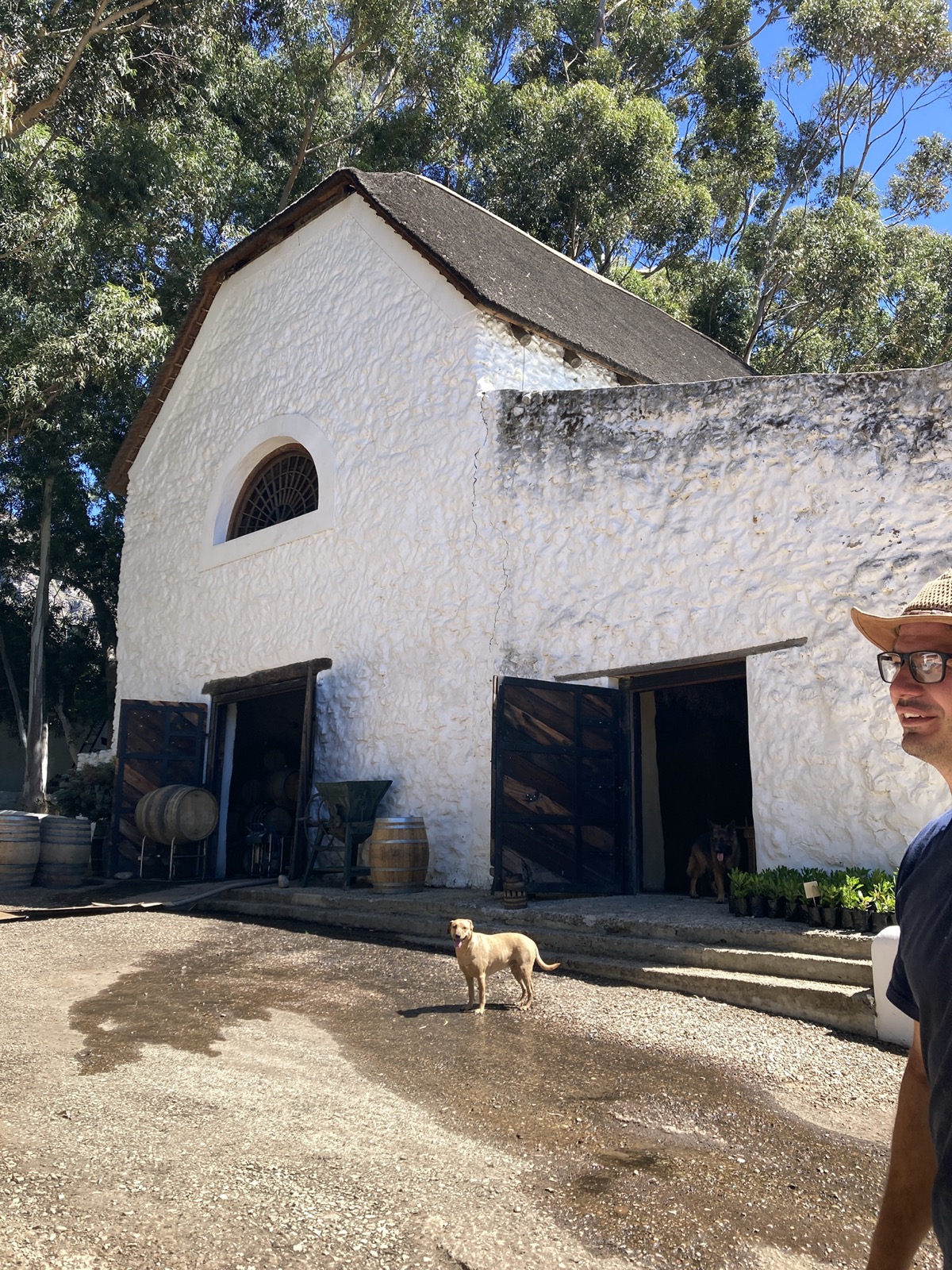
Most “best vineyards in Stellenbosch” lists are a ranking, which is a strange way to think about a wine region. Stellenbosch is not one place. It’s a handful of quite different valleys, slopes and soils sharing a name and a postal code, and an estate high in the Banghoek Valley has more in common with a farm in Burgundy than with one down on the Polkadraai flats twenty minutes away.
So rather than count down from ten, here are the estates I actually return to, grouped by the ward they sit in. If you understand the wards, you can build your own day — and you’ll understand why the wine tastes the way it does when you get there.
Banghoek — high, cool, and slow to ripen
The Banghoek Valley sits behind Stellenbosch on the road towards Franschhoek, and it is meaningfully higher and cooler than the valley floor. Ripening happens later and more gradually here, which tends to show up in the glass as freshness and structure rather than weight.
Oldenburg Vineyards is the one to see. It sits in a natural mountain amphitheatre with old soils and cool air moving through it constantly, and the wines carry a savoury, elegant line that’s unusual for South African reds. Ask for the Shiraz — it prioritises balance over power and ages beautifully. The setting alone justifies the drive.
Helshoogte — steep slopes and fine tannin
The Helshoogte Pass climbs out of Stellenbosch towards the Banhoek, and the vineyards planted on its flanks are some of the steepest farmed land in the region.
Bartinney Wine Estate is a certified sustainable producer working those slopes. The altitude and the gradient give their Cabernet Sauvignon a freshness and fineness of tannin that’s closer to a classical style than to the ripe, generous Cabernet many people expect from the Cape. If you think you don’t like South African Cabernet, this is the one that changes your mind.
Blaauwklippen — the amphitheatre
The Upper Blaauwklippen Valley is a bowl in the mountains south-east of town, and it has quietly become one of the most serious pockets of winemaking in the country.
Keermont Vineyards farms only its own fruit inside that amphitheatre. The Terrasse White Blend is the wine to ask for — layered, faintly saline, and complex enough to end the argument about whether Stellenbosch whites can stand with the world’s best. They can.
De Trafford Wines has been up here for a long time and has the closest thing Stellenbosch has to cult status. Low-intervention winemaking, small volumes, and a Cabernet Sauvignon built with real patience — structured, tight when young, and worth cellaring for years rather than months.
Helderberg — generous fruit with a backbone
The Helderberg mountain catches the maritime influence coming off False Bay, and the farms on its slopes tend to give fruit that’s generous without going flabby.
Dornier Wine Estate is consistently underrated. Striking modern architecture, a proper kitchen, and wines that manage depth and approachability at the same time. The CMD blend is the polished one; the Donatus, a Bordeaux-style blend, is the one I most often put in front of guests who say they don’t know what they like. Dornier also works well as the lunch anchor of a day rather than just a tasting stop.
Stellenzicht Vineyards works the same slopes with a terroir-first approach. Their Thunderstone Red shows what the site does with Rhône varieties — structured, layered, built to age.
Kleinood Wine Estate is boutique by conviction rather than by accident, and entirely focused on site expression. The Tamboerskloof Syrah is widely held to be one of South Africa’s benchmark Syrahs, and I’ve never had a guest disagree after tasting it.
Polkadraai Hills — the western flank
Polkadraai sits west of town, catching more of the ocean breeze, and it’s home to both one of the region’s most precise producers and one of its most personal tasting experiences.
De Toren Private Cellar is synonymous with Bordeaux-style blending done meticulously. Fusion V is still the benchmark — seamless and structured, and a useful wine to taste if you want to understand what “blending” actually achieves.
Karibib Wine Craft is the opposite in scale and the equal in interest. The tasting is unusually personal and often happens out among the vines rather than across a counter. The Syrah is fresh, spicy and expressive. This is the sort of stop that guests remember six months later.
Stellenbosch Kloof — classical and quiet
DeMorgenzon Wine Estate takes a deliberately classical approach, and the Maestro White Blend is its clearest statement — layered, fresh, age-worthy, and entirely without shouting. A good final stop on a day, when your palate wants nuance rather than another big red.
Two more worth the detour
Thistle & Weed is a minimalist, terroir-first project sourcing from carefully chosen parcels rather than farming one estate. The Cabernet Franc is aromatic and lifted, with lovely texture — and the tastings are winemaker-driven and genuinely conversational.
Waterford Estate is the most polished visitor experience of the group, and their wine and chocolate pairing has become a fixture for good reason: it’s interactive, it’s accessible to people new to tasting, and it’s done properly rather than as a gimmick.
And one just over the boundary: Noble Hill Wine Estate is technically Simonsberg-Paarl rather than Stellenbosch, but it’s close enough to fold into a day and worth doing. Committed organic farming, small-scale production, and a Carbonic Mourvèdre that is pure joy in a glass — fresh, aromatic, and serious underneath the playfulness.
How to actually plan the day
A few things I’d tell any guest before they set out.
Three estates is the number. Two feels rushed and four starts to blur, whatever your intentions are at nine in the morning. Three lets you settle into each one.
Mix a big name with a small one. A well-known estate and a boutique producer in the same day gives you contrast and context. The small producer pouring their latest release next to the cellar is a completely different experience from a formal tasting room, and you want both.
Cross a ward boundary. If you taste in Banghoek and then in Polkadraai, the difference is obvious even to a beginner. If you taste at three farms on the same slope, it isn’t. This is the single best trick for making a day educational without anyone lecturing you.
Book ahead. Most of the estates on this list require reservations, and the smaller ones — Keermont, Kleinood, Thistle & Weed — genuinely don’t run a walk-in model.
Talk to whoever is pouring. They almost always know more than the tasting note in front of you, and most of them are delighted to be asked something beyond “is this the popular one”.
Sort out the driving. This is the practical problem with the whole plan. These estates are spread across five wards and a lot of farm road, and someone has to stay sober to connect them. That’s the part I’d solve first.
If you’d rather not solve it yourself, that’s what our Stellenbosch wine tours are for — three estates chosen around what you actually like, all the driving handled, and lunch booked. Coming from the city, there’s a guide to wine tours from Cape Town too, and if your dates are still open, the best time of year to visit is worth five minutes.
Ready to experience it?
Private wine tours through the Cape Winelands
Led by a WSET-certified guide with 12+ years of local knowledge. Private groups only — tailored to your pace, your preferences, and your taste.