Destination Guides
The Best Time of Year to Visit the Cape Winelands
Harvest, autumn gold, green winter, or spring green-shoots — every season in the Cape Winelands has its own character. After years of guiding through all of them, here's how I'd help you choose.
“When’s the best time to come?”
It’s one of the first questions I get, usually months before anyone’s booked a flight. And my honest answer surprises people: there isn’t a wrong time to visit the Cape Winelands. There’s only the season that best matches what you’re hoping the day will feel like.
I’ve guided guests through the valleys in the blaze of harvest, in the gold of a late-autumn afternoon, through the green quiet of a winter that most visitors write off too quickly, and out into the first warm days of spring. Each one gives you a genuinely different day. So rather than crown a single “best” month, let me walk you through the year the way I’d talk it through with you over email — trade-offs and all.
Summer & Harvest (December to March)
This is the Winelands at full volume. Long, hot days, vines heavy with fruit, and — if you time it right — the harvest itself.
Harvest (roughly late January through March, depending on the season and the cultivar) is the most alive the estates ever get. Cellars run around the clock, the air smells of crushed grapes and fermentation, and the winemakers I work with are at their most energised even when they’re at their most exhausted. If you want to see wine being made rather than just taste the finished bottle, this is the window. A harvest-season tour is hard to beat for sheer atmosphere.
The trade-offs are real, though. This is peak season — the Cape’s holiday months — so the popular estates are busiest, restaurant tables are harder to come by, and the heat around midday can be genuinely fierce. It’s also when a private, pre-planned day earns its keep most: the difference between fighting the crowds and gliding past them is largely down to knowing where to go and when. (If you’re wondering how a day like this actually unfolds, I’ve written a full walk-through of what to expect on a full-day tour.)
Best for: first-timers who want maximum energy, anyone curious about winemaking, long golden evenings.
Autumn (April to May)
If you pushed me for a favourite — and people do — this is it.
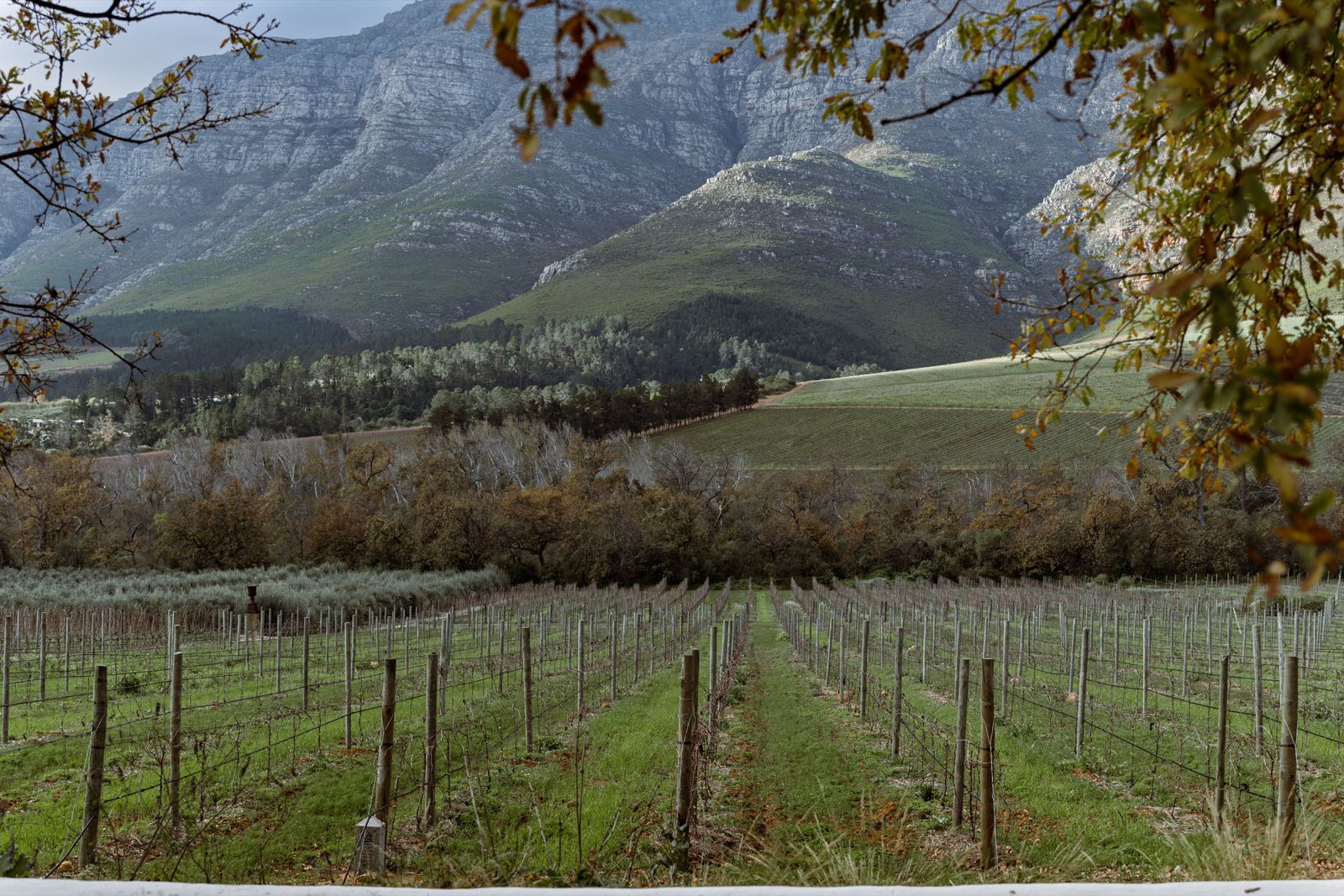
Autumn is when the vineyards turn. The leaves shift through gold, amber and deep red, the harvest rush has settled, and the light softens into something photographers spend their careers chasing. The heat of summer has broken but the days are still warm and clear. The estates have exhaled, which means the people pouring your wine have more time to actually talk to you.
It’s also the season the valley looks its best from anywhere you stand — cool air, autumn colour through the vineyards, and quieter tasting rooms. I’ve written about our autumn experiences generally, if the season appeals.
Best for: photographers, couples, anyone who wants beauty and calm in equal measure. If you can only come once, come in autumn.
Winter (June to August)
Winter is the season most visitors dismiss, and the one I most enjoy sharing with the ones who don’t.
Yes, it rains, and yes, some days are cold and grey. But the Winelands in winter has a fireside quality you can’t get any other time of year. Green hills, mist hanging in the valleys, snow on the high peaks on a good week, and tasting rooms with the fire lit and almost no one else in them. This is when you get the winemaker’s undivided attention — the estates are quiet, and a small private tour feels less like a booking and more like being hosted. (Winter is also when the case for going private rather than joining a group bus is at its strongest — I’ve laid out that comparison here.)
It’s also the value season. Fewer crowds, easier restaurant reservations, and a valley that belongs, for a few months, mostly to the people who live here. Bring a jacket, plan around the weather rather than against it, and winter will reward you.
Best for: travellers who prefer intimacy over sunshine, food-led days, better value, and having the place to yourselves.
Spring (September to November)
Spring is the valley waking up. The vines push their first bright-green shoots, the roadsides fill with wildflowers, and the whole landscape has a fresh, hopeful quality after the winter rains.
The weather is a genuine mix — you can get a perfect blue-sky day and a cold snap in the same week — but that unpredictability is part of the charm, and it keeps spring pleasantly uncrowded before the summer surge arrives. Everything feels like it’s on the way up.
Best for: shoulder-season travellers who want good weather odds without peak-season crowds, and anyone who loves a landscape in bloom.
So — When Should You Come?
Here’s how I’d sort it, quickly:
- Want the biggest, most energetic day? Summer, ideally during harvest.
- Want beauty, colour and calm? Autumn. My pick.
- Want intimacy, value and a fire in the tasting room? Winter.
- Want fresh landscapes and fewer crowds? Spring.
Once you’ve settled on a season, the next two questions are usually which valley and how to get there. If you’re torn between the two headline destinations, my guide to Stellenbosch or Franschhoek should help — and if you’re based in the city, here’s how a day trip from Cape Town actually works.
And if none of that settles it, that’s exactly what I’m here for. Tell me when you’re able to travel and what you want the day to feel like, and I’ll tell you honestly what that season gives you — and build the right day around it.
Planning a trip and not sure which season suits your group? Get in touch and we’ll work it out together — or read what’s included in a full-day private Stellenbosch wine tour.
Ready to experience it?
Private wine tours through the Cape Winelands
Led by a WSET-certified guide with 12+ years of local knowledge. Private groups only — tailored to your pace, your preferences, and your taste.