Planning Guides
What to Expect on a Full-Day Wine Tour in Stellenbosch
A full-day private wine tour in Stellenbosch runs 5–7 hours, visits three estates, and includes pick-up and all tasting fees. Here's exactly how the day unfolds.
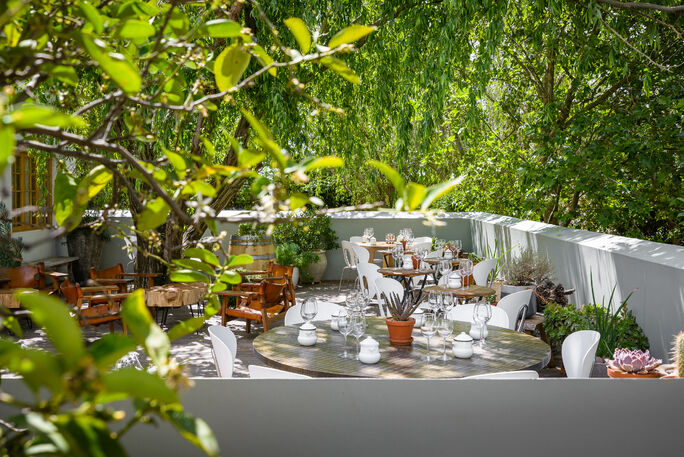
A full-day private wine tour in Stellenbosch runs 5–7 hours, visits three estates, and ends at your accommodation. Pick-up is included; tasting fees are included; lunch is included; the guide is exclusively yours. That’s the structure. Here’s what it actually feels like.
The Morning Pick-Up
I collect guests from their accommodation — whether that’s in Stellenbosch itself, Franschhoek, or Cape Town — and we talk in the car on the way to the first estate. I want to know what you’ve tasted before, what you love, what you’re curious about. A couple who drink Burgundy at home gets a different day than a group who’ve never been to a cellar before. Both are good days; they’re just different days.
Driving out of Cape Town on the N2, the Winelands start announcing themselves about 30 kilometres in — the Hottentots Holland mountains ahead, the first vineyard slopes appearing on either side of the highway. By the time you turn off towards Stellenbosch, the mood in the car has usually shifted.
The First Estate
We arrive at the first estate around 10:00–10:30 AM. I choose the morning estate based on what it’s best at — if we’re looking at cool-climate whites, we go somewhere that does those well before palates have been shaped by anything else. If the group wants to understand the Cape’s classic red blends, we start where those are made most honestly.
Tastings at the family estates I work with run 45 minutes to an hour. This isn’t a rush-through. There’s usually a winemaker or a family member involved in the pour, and the conversation goes where it goes. I translate when that’s useful — what a particular soil type means for what’s in the glass, why a vintage behaved the way it did, what makes this producer’s approach different from their neighbours’.
Midmorning to Lunch
The second estate comes mid-morning. By now there’s a language forming — guests who arrived uncertain about what they like are starting to articulate preferences, noticing things they didn’t notice at the first estate. That’s one of the most satisfying parts of this work: watching someone’s vocabulary for wine expand over the course of a few hours.
Lunch is usually between the second and third estates — around 1:00 PM. I make a recommendation based on the group. For guests who want a long, leisurely table among the vines, I book accordingly. For guests who’d rather eat somewhere with a view of the mountains, we go there instead. Some of the Stellenbosch estate restaurants are genuinely world-class kitchens. This part of the day is not an afterthought.
The Afternoon Estate
The final estate has a different quality. By now the group has been talking wine for four hours and something has relaxed. The questions get more specific. The conversation moves away from the basics and into things people are actually curious about — a winemaker’s philosophy, a debate about natural wine, what Stellenbosch can do that Bordeaux can’t.
I try to keep the afternoon estate slightly different in character from the morning ones — a change of scale, or a different style, or an estate with a particularly striking cellar or setting. The day should build.
The Return
I drop guests back at their accommodation by late afternoon, usually 5:00–6:00 PM. In my experience, the last ten minutes of the drive are often some of the best conversation of the day — people have settled, they’ve absorbed what they tasted, and they’re talking about which bottles to try to find when they get home.
Practical Notes
What to wear. Comfortable, relaxed clothes. The estates involve some walking — cellars, vineyards, barrel rooms. Flat shoes are sensible; smart casual is fine; there’s no dress code.
What to eat beforehand. Something. Tasting on a completely empty stomach is not the experience you want. A light breakfast is enough.
Non-drinkers. Every estate I work with offers non-alcoholic alternatives — grape juices, dealcoholised wines, estate-produced soft drinks. The experience doesn’t diminish; it’s just a different tasting. I’ve guided plenty of guests who don’t drink and they often have the most interesting observations.
Cancellations. Cape Town weather is occasionally dramatic. I’ve never had to cancel a tour due to rain — the estates are largely sheltered and a grey day in the Winelands has its own character — but if conditions make travel genuinely unsafe, we reschedule at no charge.
The day is yours. It goes where your curiosity takes it.
Still choosing when to come? A tour in harvest season feels very different to one in the green quiet of winter — my guide to the best time of year to visit the Cape Winelands walks through each one.
Or see the full itinerary and pricing for our Stellenbosch wine tours.
Ready to experience it?
Private wine tours through the Cape Winelands
Led by a WSET-certified guide with 12+ years of local knowledge. Private groups only — tailored to your pace, your preferences, and your taste.